
How Cuyahoga Falls Arrests Work
Local police work in Cuyahoga Falls belongs to the city department. Its officers write the incident records. A jail record is a different animal. Booking into Summit County Jail creates a custody entry that the Summit County Sheriff's Office maintains, and the city posts no table promising that everyone its officers arrest lands there. Custody has to be confirmed, not assumed.
The 2020 Census counted 51,114 residents, making this Summit County's second-largest incorporated city. Its police department stands apart from the Sheriff. Other agencies can also make an arrest tied to Cuyahoga Falls. The agency field on a jail report shows who acted. The incident report tells one agency's story. The jail report answers a narrower question: whether the person sits in Summit County Jail right now.
Where Cuyahoga Falls Arrests Appear
The city police pages carry no daily Cuyahoga Falls arrest roster or mugshot blotter. Official sources still split cleanly by purpose. Police records cover the incident. The Sheriff report shows county custody. A court docket tracks what follows, and news or third-party pages lack the authority and full scope of those public offices.
| Channel | Coverage | Photos | Status |
|---|---|---|---|
| Cuyahoga Falls Police records | Requested city incident reports | No public photo feed | Official city source |
| Summit Sheriff head count | Current county-jail custody | Shown in the PDF | Official county source |
| Mayor's Court or Common Pleas | Docket events and outcomes | Not a mugshot service | Official court source |
| Local news | Selected reported cases | Varies by story | Editorial, not complete |
| County aggregation pages | Compiled booking entries | Often included | Unofficial, may be stale |
The official Cuyahoga Falls Police page covers public information and the records route. No daily booking list appears on it.
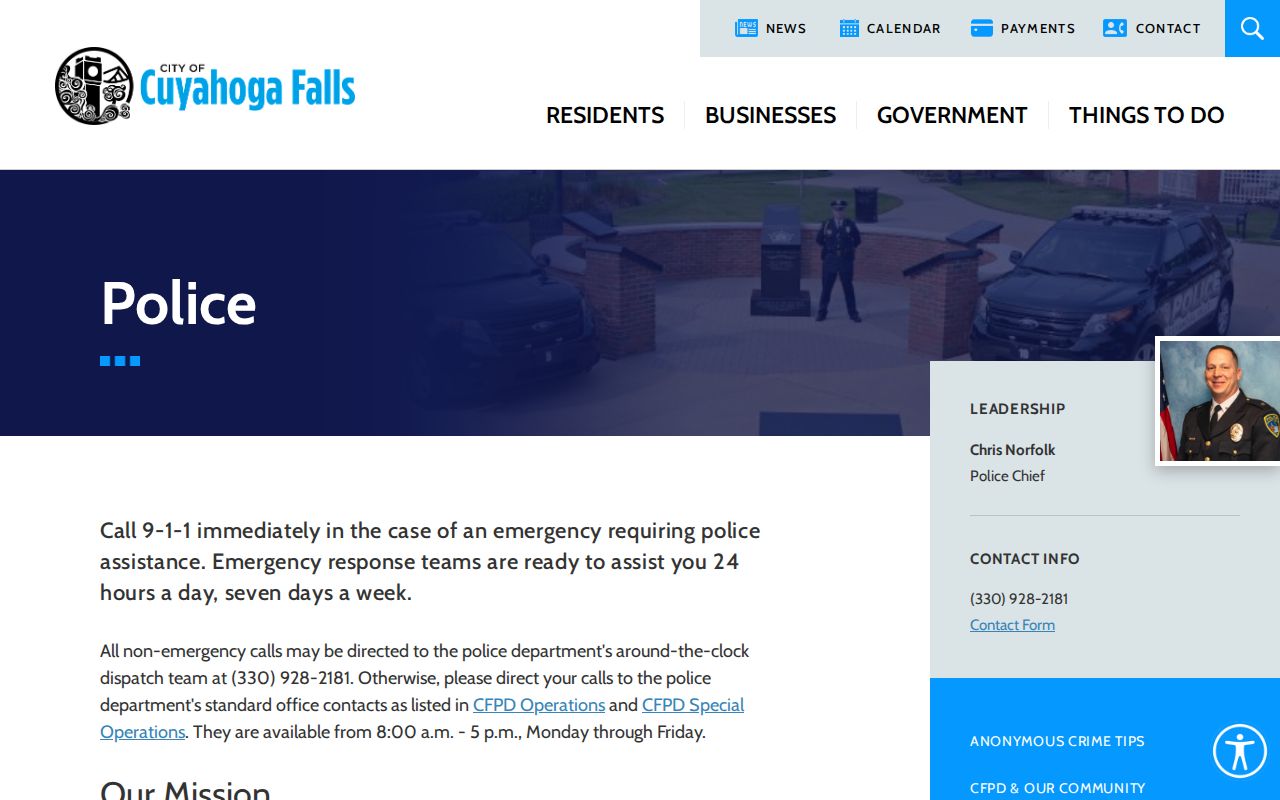
The city police page is distinct from the separate Summit County Jail custody report.
Find an Arrested Person in Cuyahoga Falls
Start with the fact you need. Current custody means the Sheriff report. Why city police responded means the city report. A final charge or result lives in a court docket, and using all three in order keeps one source from standing in for a full case history.
- Check the Summit Sheriff roster landing page if county-jail custody is possible. It leads to the Head Count With Photos Report.
- Search the PDF text for a surname. Read the whole entry, including arrest date and time, agency, custody or bond, statute, and description.
- If no match appears, allow for intake lag, release, transfer, spelling differences, or a protected record. This PDF is not a past-booking archive.
- Request the city incident report. Use the report number when known, or the identifying facts accepted by the city form.
- Check the correct court. Mayor's Court handles certain city misdemeanor and traffic cases, while felony or indictment matters move through Summit Common Pleas.
A released person may have already rolled off the active PDF. Prison sentences move a person to the Ohio Department of Rehabilitation and Correction search, not the county head count. Photos and custody get separate treatment. See the Summit County mugshots and records section.
Note: The Sheriff's PDF is a current head count, so an older arrest date can appear beside someone who remains in custody.
Cuyahoga Falls Arrest Report Requests
The city route is a case-specific request, not a public arrest-search portal. Its incident-report form takes a report number. Without one, a requester supplies any two of these: the person's name, the incident date, or the incident location. The city emails reports within seven days. Records hours run weekdays, 8 a.m. to 4 p.m. The city lists no booking-photo fee, so Records should confirm whether an image exists, whether it can be released, and the cost.
Use the city route for a Cuyahoga Falls Police incident report. Sheriff Records & ID handles a Summit County Jail booking or retained county photo. The Local Records Check Release Form is a different product. It needs signed authorization. It sends requesters to Ohio BCI for complete arrest and conviction details and to the Clerk of Courts for certified final dispositions. Pick the route that fits.
2310 Second Street
Cuyahoga Falls, OH 44221
Non-emergency: 330-928-2181
Records: 330-971-8303
Records hours: Weekdays, 8 a.m.-4 p.m.
The official incident-report request form shows the fields used to find a city report. It also notes the email delivery period.
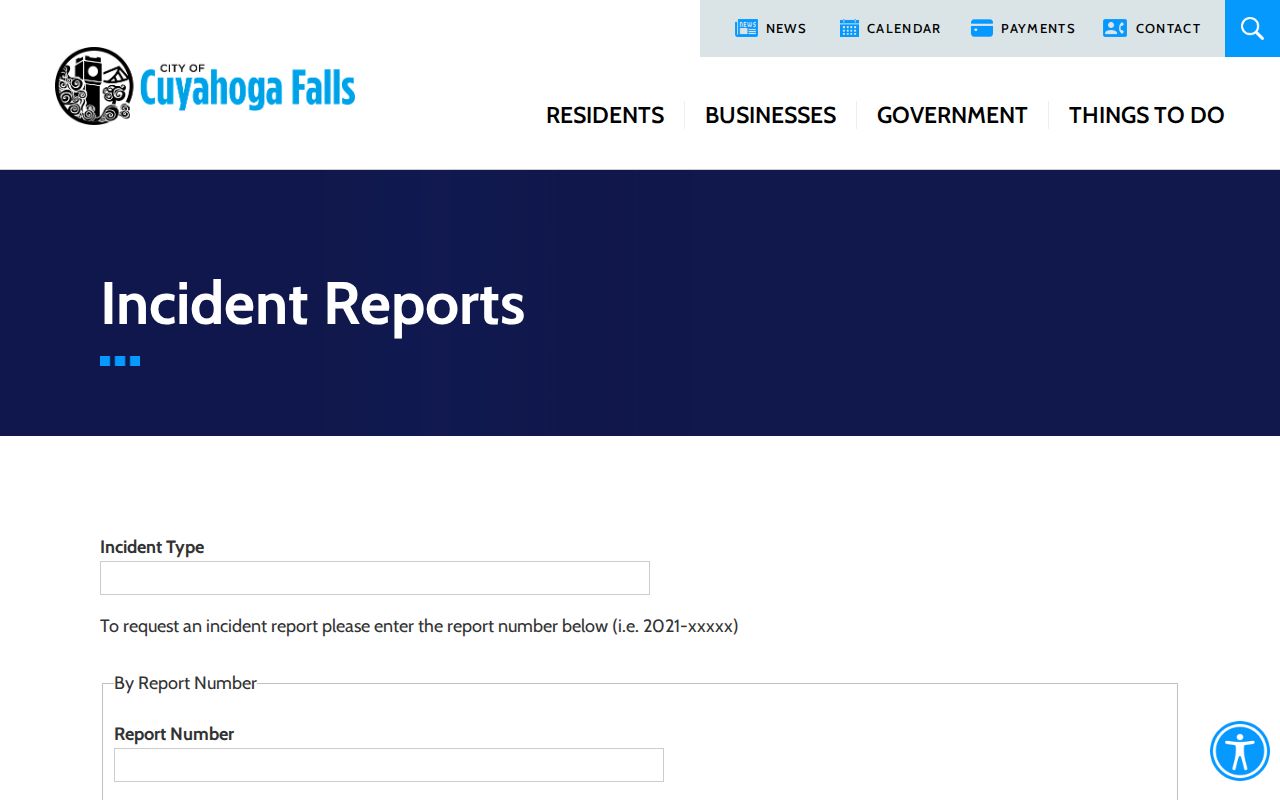
Since no public Cuyahoga Falls arrest blotter exists, the form is the direct city fallback.
Mayor's Court and Common Pleas
An arrest record is only the start. Cuyahoga Falls Mayor's Court takes certain misdemeanor and traffic matters. Summit Common Pleas handles felonies and indictment cases. The city Law Department's criminal division prosecutes city misdemeanors, and its Direct Indictment Program with the Summit County Prosecutor can cut roughly three weeks between arrest and arraignment. That is a local process detail.
Booking is the jail intake step. Arraignment is the hearing on charges and plea rights. A disposition is the court's later outcome. These stages can surface in different systems at different times. The statute listed in the Sheriff's active report reflects what was entered at booking, so it may not match a later indictment, amended charge, dismissal, plea, or judgment.
Compare the police report and jail entry against the correct court. A person can drop off the active jail report while the case stays open. Custody can also continue on more than one matter after one charge changes. Court records supply what a head count cannot.
When Cuyahoga Falls Bookings Post
Timing comes first. The Summit County Sheriff posts a Head Count With Photos Report daily. Nothing promises how quickly a booking appears. Intake has to finish first. The entry can shift later, too, since releases and transfers occur around the clock and court paperwork adds two to three hours. Names appear, change, or roll off. No public city archive grows out of that churn. The report is also broader than today's Cuyahoga Falls arrests. Rows can include earlier arrests by people still in county custody, plus referrals from several agencies. Check the arrest date and agency fields. When timing matters, call the jail Registrar at 330-643-2200 or confirm with the arresting agency and court.
Youth Records May Be Withheld
Youth cases work differently in Cuyahoga Falls. City police materials describe diversion work with young offenders and warn that a juvenile may have no public Juvenile Court record. That limit belongs to the city itself. A blank result can mean law, not failure. Ohio public-records law lets offices withhold or redact protected details. Do not infer a name or image. Unofficial listings deserve no trust for juvenile matters. Ask the record-holding office what it can release, and skip needless personal detail. For adults, the agency report and court docket carry the arrest record. A missing youth docket is not proof that police did nothing.
Note: Diversion may keep a youth matter out of a public juvenile docket, so city records staff should define what is lawfully available.
Local News Coverage Limits
Local news fills part of the gap. Cleveland19 local news and News 5's Summit section cover selected stories. Police, Sheriff, court, and task-force news all appear there. Coverage adds context and sourcing. Still, neither outlet is a full Cuyahoga Falls arrest log. Any image may come from police, the Sheriff, a court filing, or the scene. Check its credit and date. Aggregator pages pose other traps. Busted Newspaper, RecentlyBooked, Mugshots.com, and Mugshots.zone run county pages. Those pages may include Cuyahoga Falls records. The entries stay unofficial, often stale, and sometimes labeled only Summit County. The city posts no official booking gallery, and none appears here. So follow source order when charges change. Start with the city agency and county custodian, then read the court record. Treat news as context for selected cases. An aggregator is only a lead. A dated booking photo or label can mislead about current custody.